WebPad
What’s going on
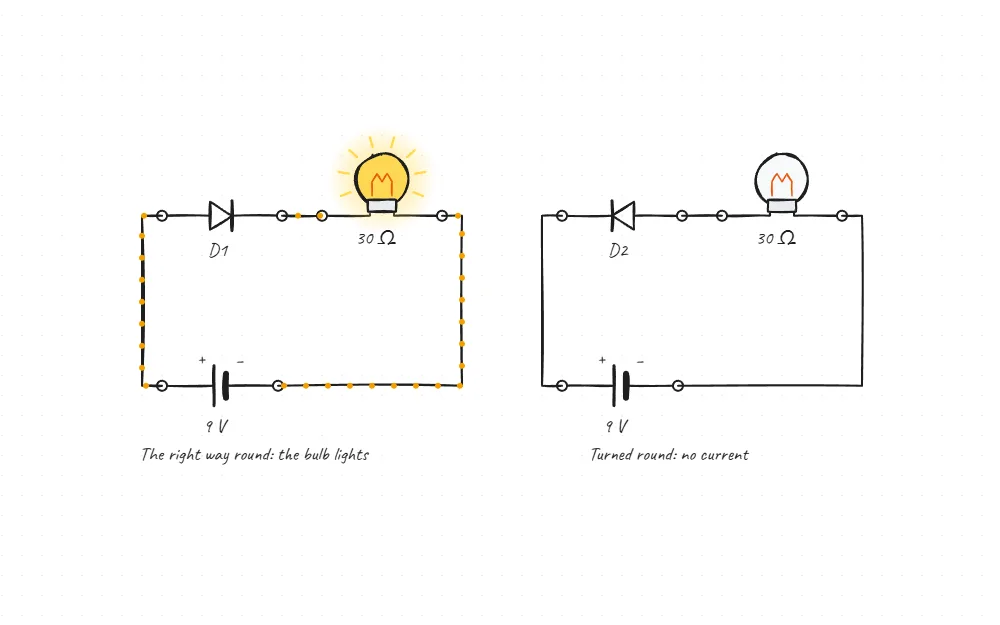
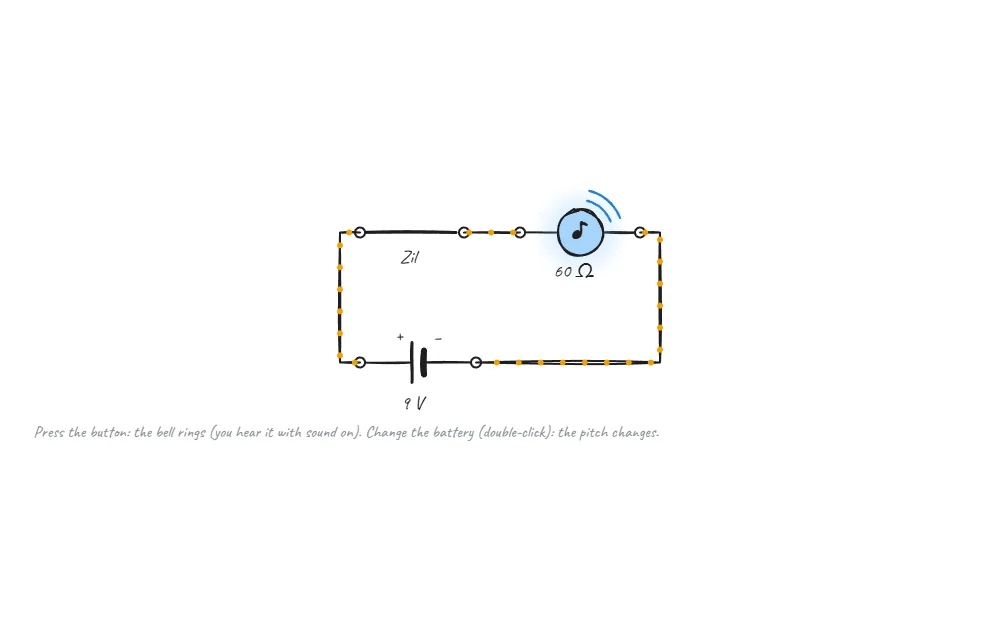
For a circuit to work, current needs an unbroken path from one end of the battery, through the components and back to the other end. That is a closed circuit.
The button is a switch that opens and closes this path. Not pressed, the path is open (an open circuit) and nothing happens. Pressed, the path is complete, current flows and the buzzer sounds.
A buzzer turns electrical energy into sound. In this experiment, changing the battery’s voltage changes the pitch too.
Things to try
- Press the button (with your sound on). The bell rings and shakes.
- Delete one wire, then press the button. Nothing: the path is broken, the circuit is open.
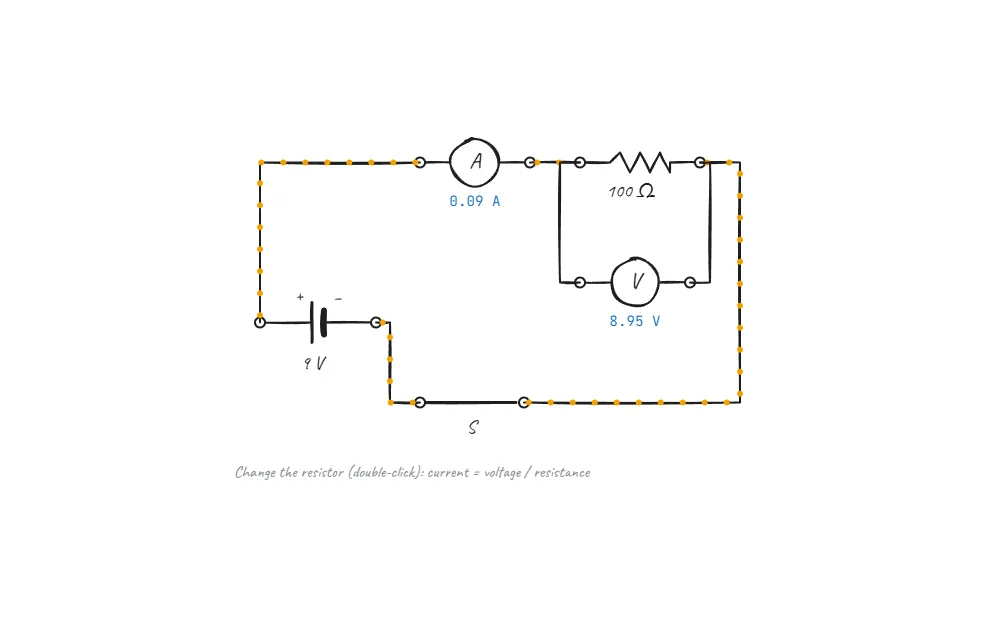
- Double-click the battery and change its voltage. The buzzer’s pitch goes up or down.
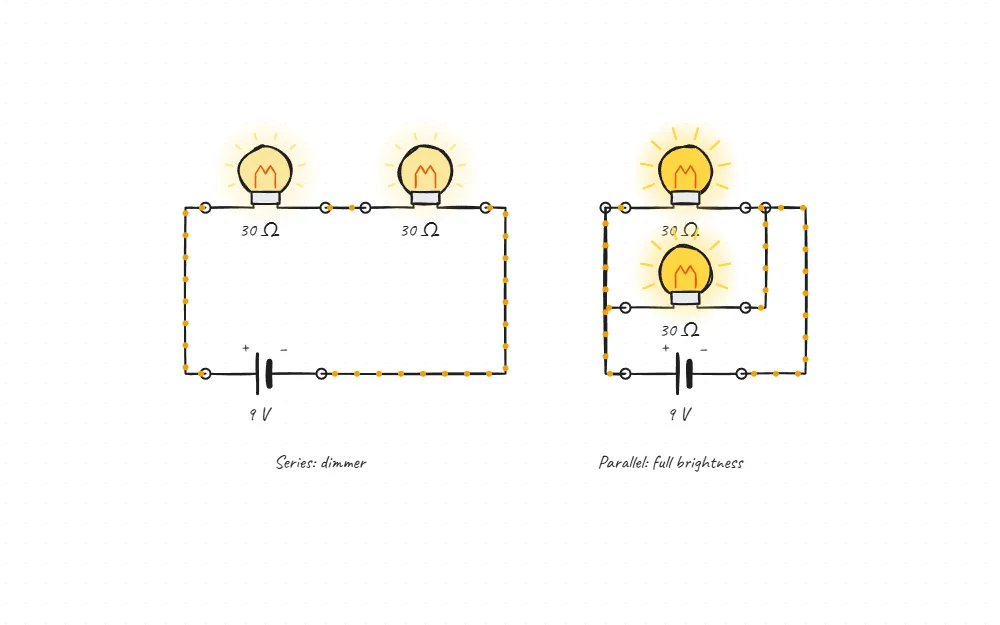
- Take a bulb from the library and wire it in series with the buzzer. Press the button and the bulb lights while the bell rings.
Questions and answers
What is the difference between an open and a closed circuit?
A closed circuit has an unbroken path for the current, so it works. In an open circuit the path is broken somewhere and no current flows.
What does the button do in a doorbell?
It closes the circuit only while it is held down; let go and the circuit opens and the bell stops.
What energy does a buzzer turn into what?
Electrical energy into sound energy.
For teachers
- With younger pupils, play “Why won’t it ring?”: you delete a wire, they find it.
- Use this simple circuit to introduce the symbols for each component.