WebPad
What’s going on
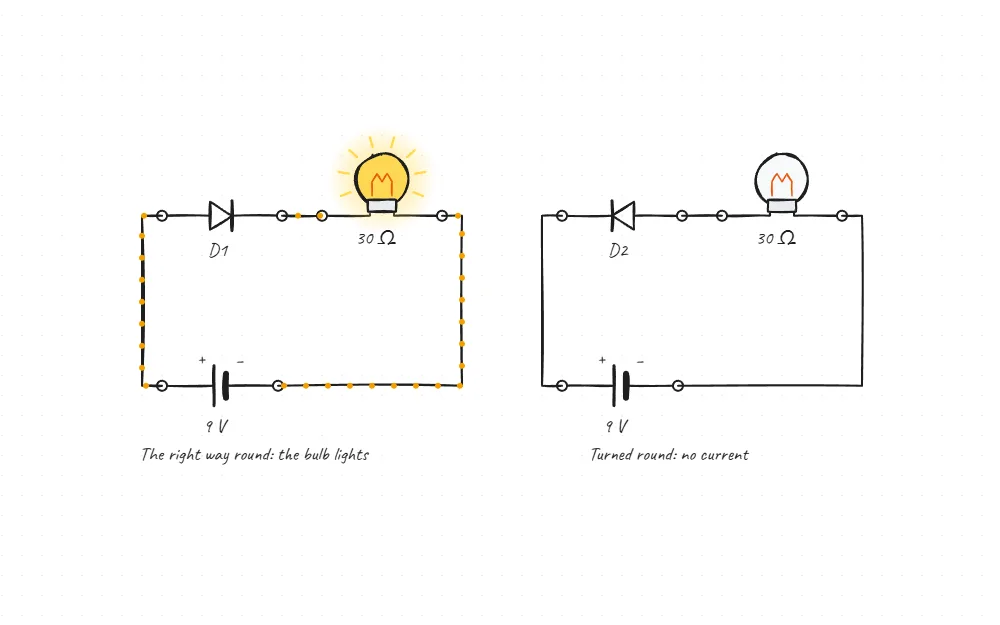
A diode is a component that lets current through in one direction only. The triangle in its symbol points the way current can flow; the bar marks where it stops.
The right way round (forward bias) current flows and the bulb lights. A small voltage is left across the diode, about 0.7 volts for a silicon diode. Turned round (reverse bias) the diode blocks the path and the bulb stays dark.
Phone chargers use diodes to turn the alternating current from the socket into direct current. LEDs are diodes that give off light, and they too only light one way round.
Things to try
- Open the experiment and compare the two circuits. The left bulb lights, the right one doesn’t.
- In the right circuit, swap the battery’s wires (plus and minus). Now that diode faces the right way and the right bulb lights too.
- Delete the left diode and draw a plain wire in its place. The bulb glows a little brighter: the voltage the diode used now goes to the bulb.
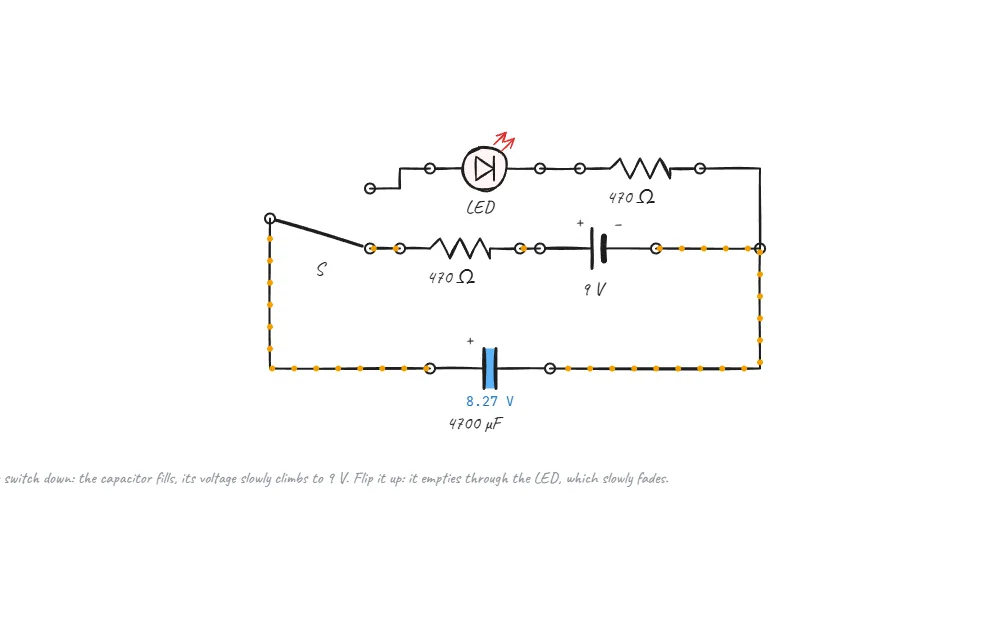
- Add an LED from the library and try it both ways round. Like a diode, it only lights one way.
Questions and answers
What happens when a diode is connected the wrong way round?
It doesn’t let current through; the circuit acts as if it were open and the bulb stays off.
Why is some voltage left across a diode that is conducting?
A diode needs a certain voltage before it conducts, about 0.7 V for silicon. The rest of the battery’s voltage goes to the bulb.
Where are diodes used in everyday life?
In chargers to turn AC into DC, to protect devices from batteries put in backwards, and as LEDs for light.
For teachers
- Draw the symbol first and ask “Which way does current flow?”, then check with the experiment.
- Ask students to design a simple circuit that protects a device from a battery put in the wrong way.